There's a pattern we see constantly in HVAC&R projects across India. The system is technically correct. The equipment meets the load calculation. The refrigeration circuit is properly sized. The installation passes commissioning. And then the cold room runs 3°C above target. The data centre keeps triggering thermal alerts. The AHU struggles at peak summer load.
The problem isn't usually the equipment. It's the gap between equipment selectionand system behaviour.
Most HVAC load calculations are done correctly — for a single design condition. Peak summer. Full occupancy. Clean filters. Perfect ambient. But real systems don't operate at design conditions. They operate at 30–70% of design load for the majority of their running hours. And at part load, a system sized for peak performs poorly.
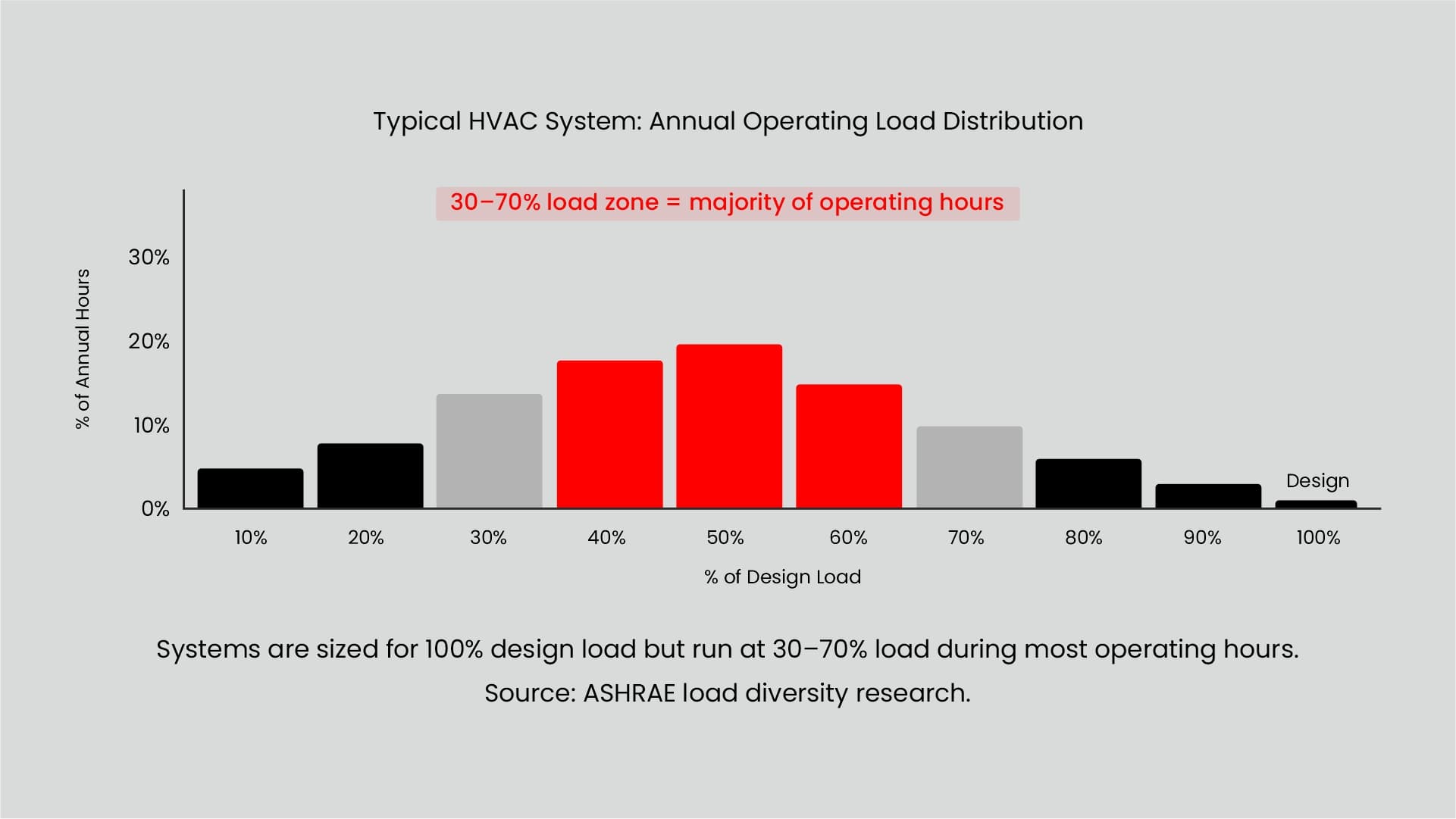
The classic example: a cold room fan selected for maximum CFM at design condition. At 40% load — which is where it runs most of the time — the fan operates far from its best efficiency point. It's drawing close to full power. It's generating more noise. And it's delivering more airflow than the evaporator can absorb, creating turbulence that reduces effective heat transfer. The system is working. But it's not performing.
A system selected for peak load rarely operates efficiently at the part-load conditions that define its real-world energy consumption.”
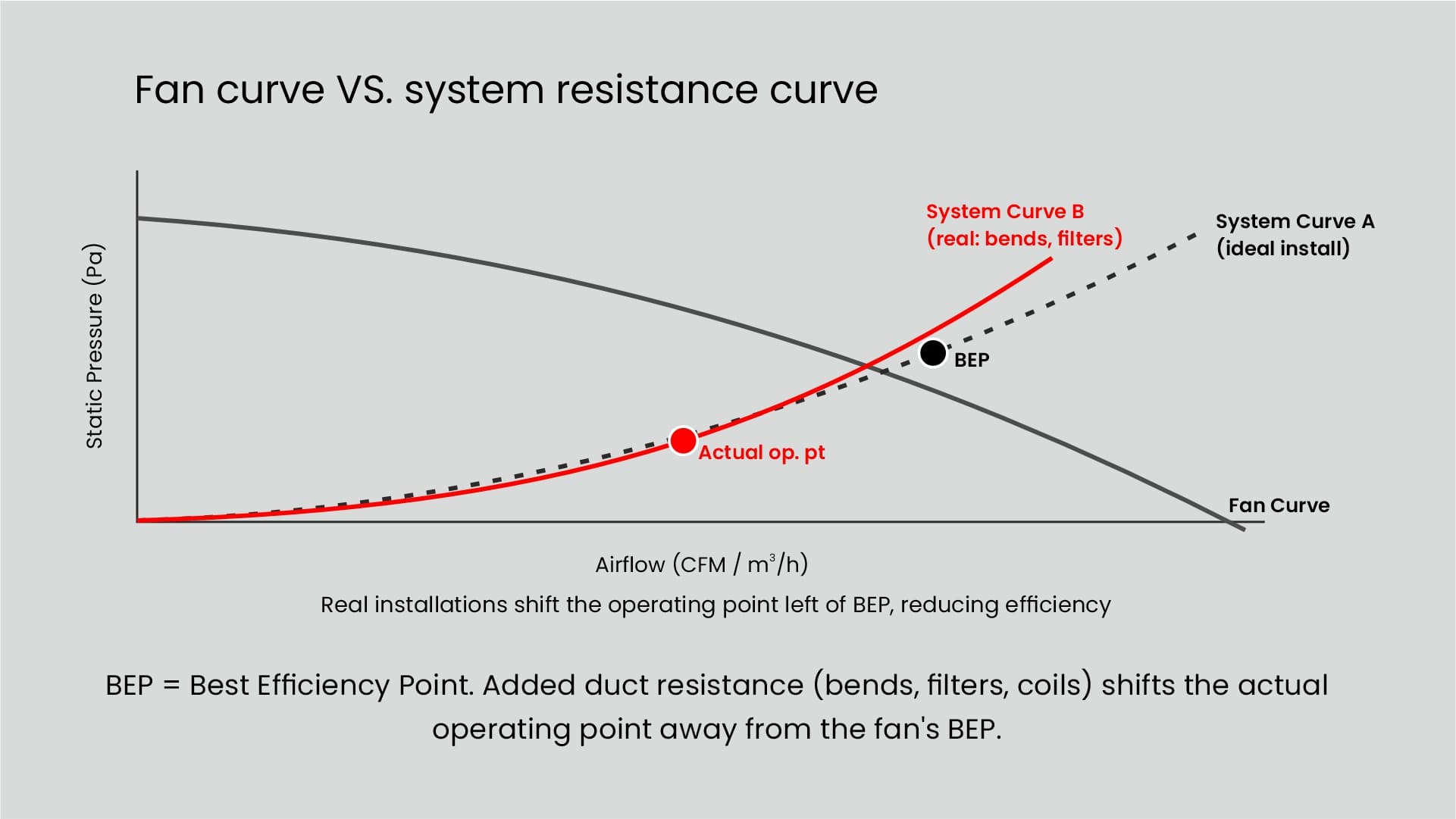
A fan selected purely on free-air CFM will rarely operate at that CFM in a real installation. Ductwork, bends, filter pressure drop, coil resistance — all of these shift the operating point. A correctly selected fan is chosen where the system resistance curve intersects the fan curve at a stable, efficient operating point. This requires knowing the system, not just the fan.
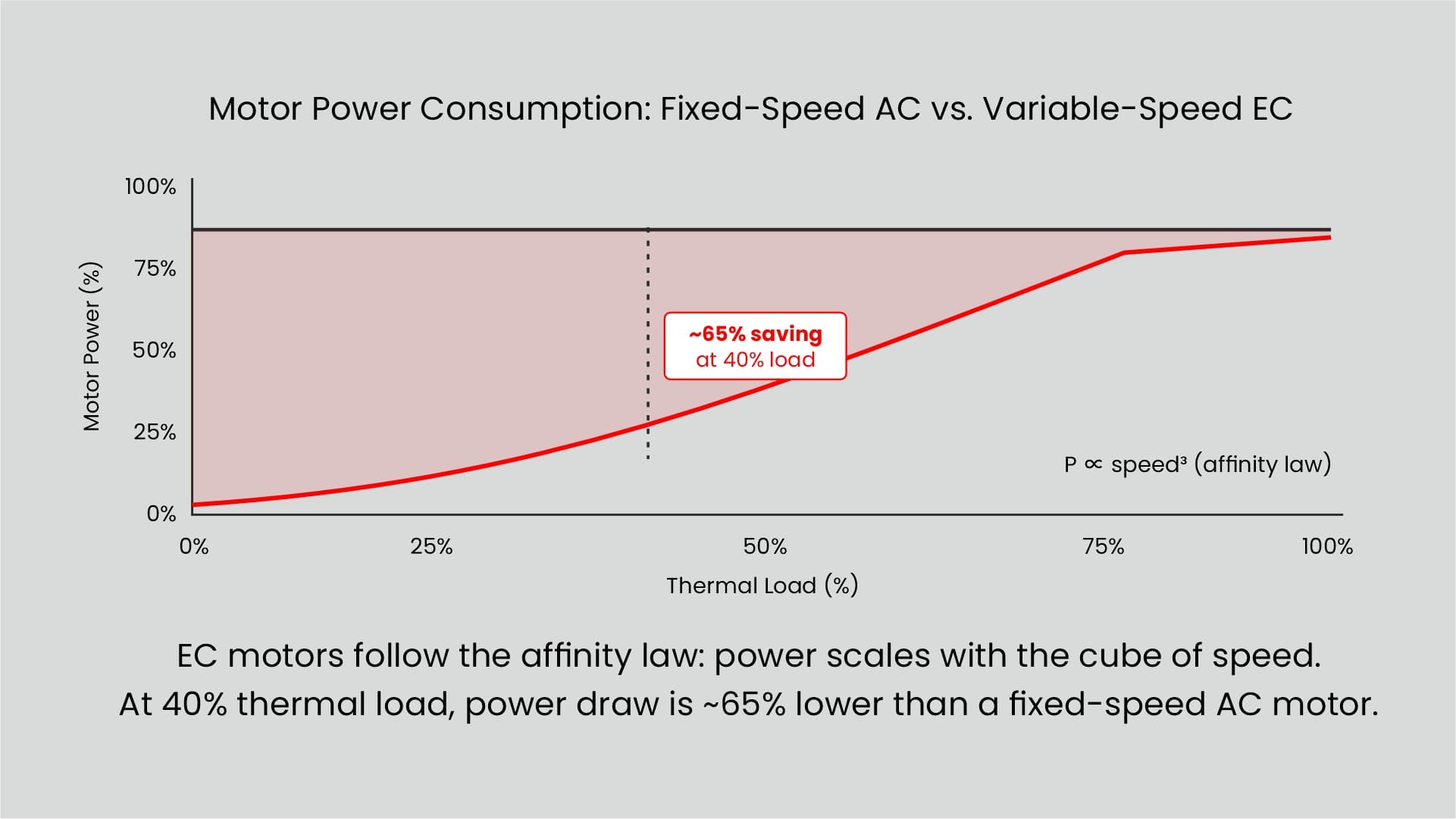
This is the most widespread energy waste in HVAC&R today. An AC shaded pole motor in a refrigerated display case runs at constant speed regardless of thermal load. An EC motor with variable speed control reduces speed — and therefore power, cubically — when demand drops. The energy saving isn't dramatic at full load. It's compounding across thousands of part-load hours per year.
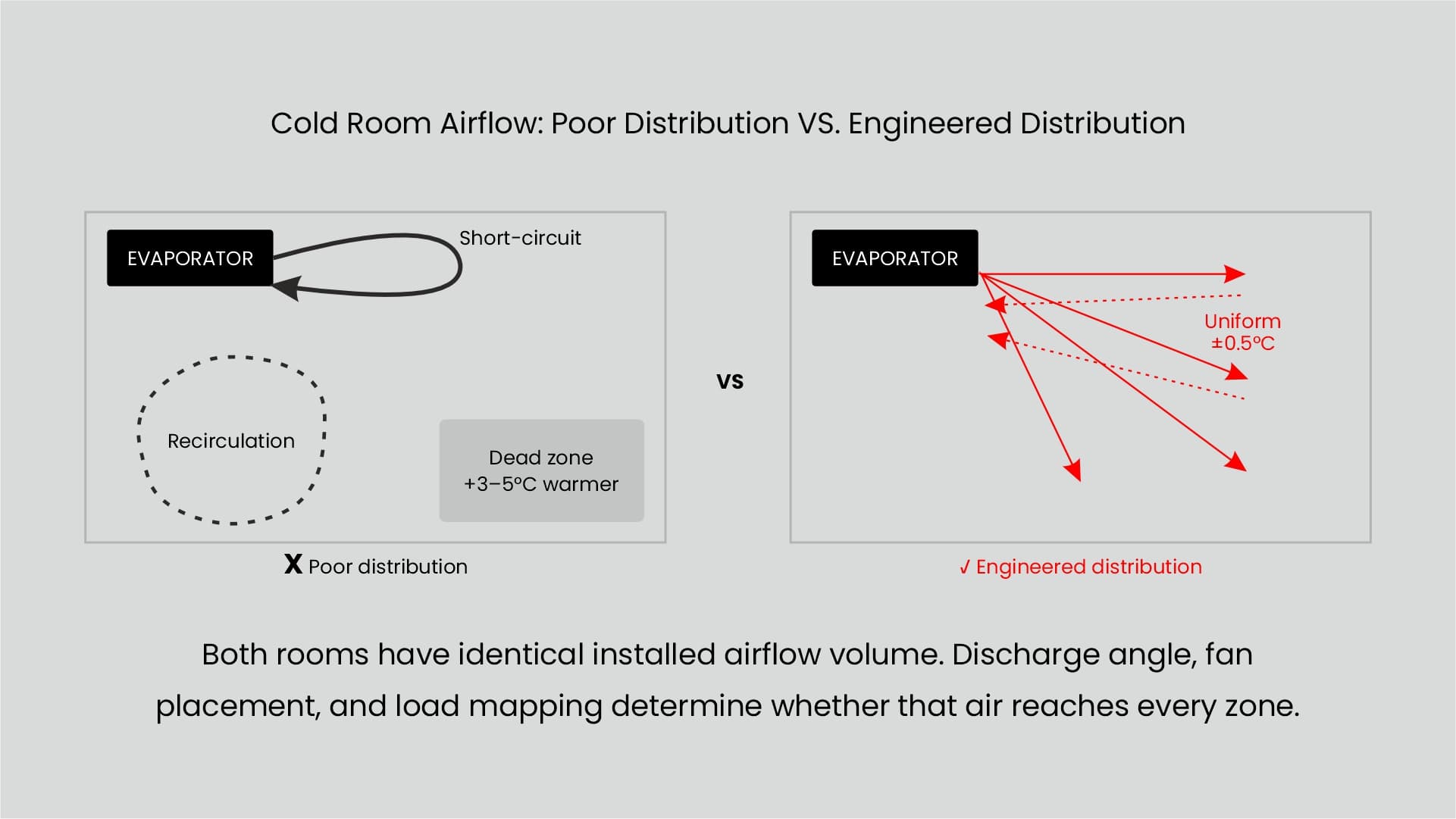
Moving X cubic metres per hour through a space is not the same as distributing conditioned air evenly across it. Recirculation zones, short-circuit airflow, and dead corners are not equipment failures — they're design failures. The fan selection, placement, and discharge angle must be co-designed with the thermal load map of the space.
India's HVAC&R market is growing fast — cold chain infrastructure, data centre expansion, EV adoption, commercial refrigeration. Every one of these applications demands better airflow engineering, not just more equipment. The engineers and OEMs who understand system behaviour, not just equipment selection, will build the projects that actually perform.
At trumaxx, we work with OEMs and system designers to select the right fan or motor for the actual operating condition — not just the design condition. If you're specifying a fan for a new project, we'd like to be part of that conversation early.
Get in touch with trumaxxCopyright © 2024 Safe Refrigerations (P) Ltd. | Privacy Policy | Terms & Condition